
A Responsibility Matrix
The map is not the territory.
— Alfred Korzybski
We are used to thinking about an organization’s structure through its org chart. It’s clean. It’s sleek. And it usually looks something like this:
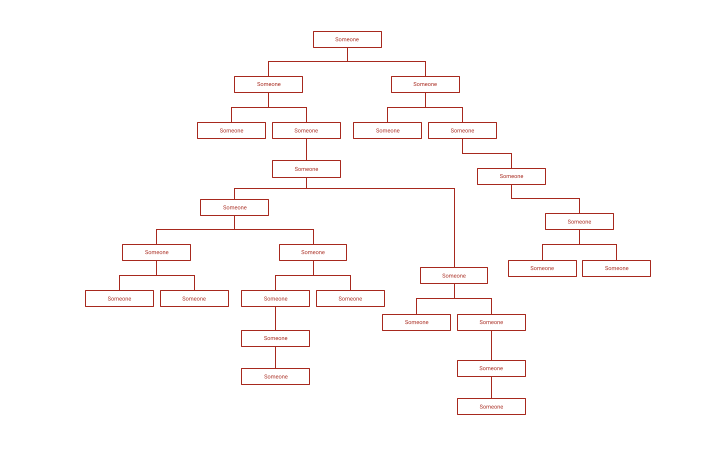
This is great – for Human Resources. It shows them how each person slots into an HR position.
Unfortunately, it shows almost nothing about how work gets done and how key strategies propogate across the organization.
The Responsibility Matrix asks you to adjust your mental map to focus on the terrain that matters – how ‘performance’ takes place.
Consider Andy. He’s a data analyst.
Here’s Andy in the org chart
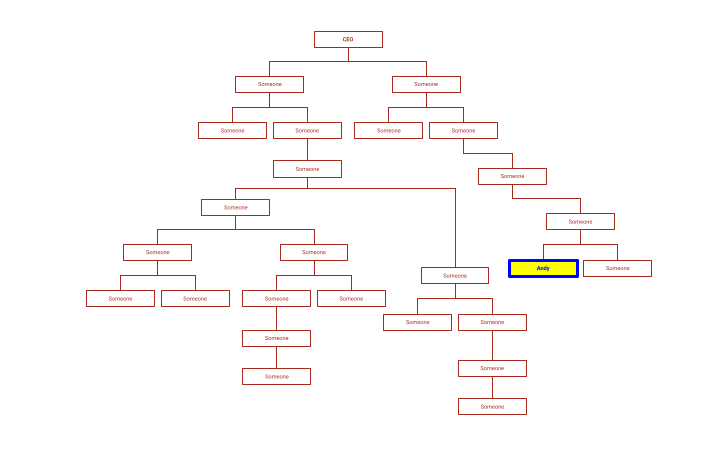
According to Andy’s job description, his role is to provide daily production reports to the executive leadership team. It looks like this:
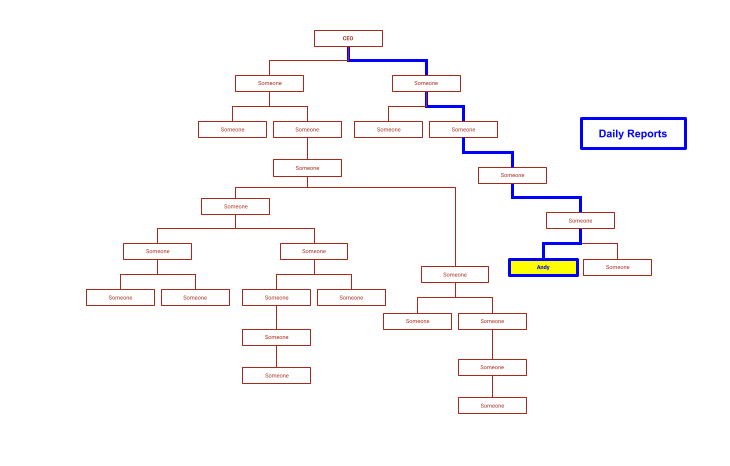
That’s simple and straight-forward.
Now let’s talk about the real world.
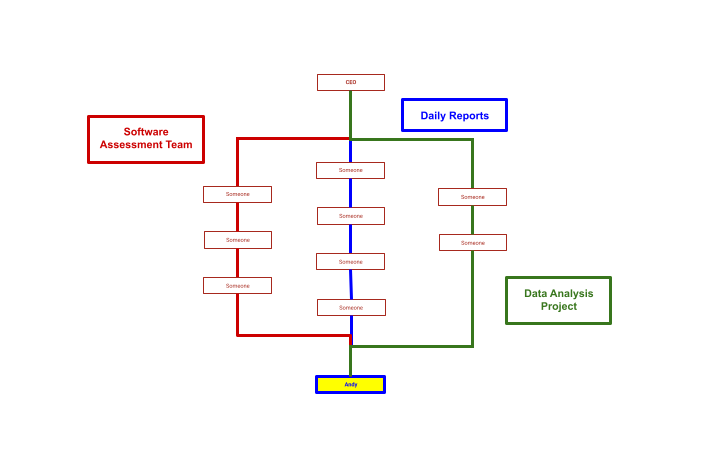
Andy also part of a Software Assessment Team. And he’s a key figure on a Data Analysis Project. And, realistically, his role on these two activities is more strategically important than simply providing daily production reports. Andy’s real contributions look like this:
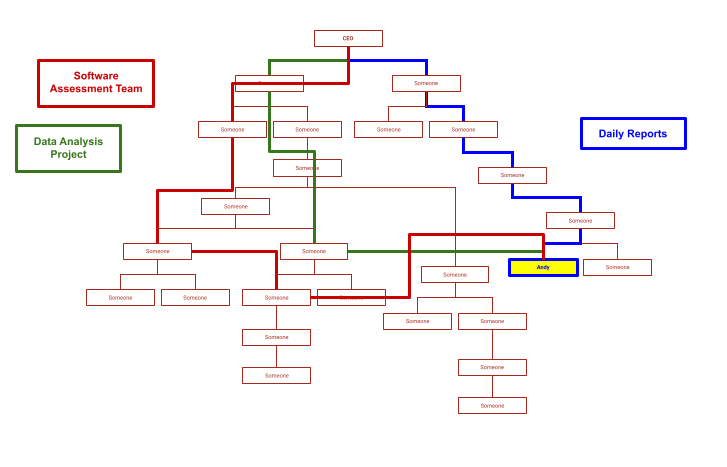
Which of these is a more strategically accurate image of Andy’s contribution?
Tidy, but irrelevant
Messy, but accurate
And which mental image is more likely to help Andy become an enthusiastic and engaged contributor?
I’m a box!
I’m a meaningful contributor!
The Responsibility Matrix isn’t about drawing better charts. It’s about reframing our mindset.
It’s about recognizing that strategic contributions aren’t a collection of job descriptions, linked by administrative reporting lines. When you superimpose strategic contributions onto the org chart, it gets messy because these are two completely different mental models.
You can create a separate TRM-focused performance chart if you want. It’s just a matrix of mission chains, connecting each person’s specific responsibilities. And it can help you track strategic execution. But that’s not the point. The point is to create a mindset where responsibilities, not job descriptions, become the fundamental focus.
TRM revolves around this second, more useful mental model. It’s this second model – The Responsibility Matrix – that impacts our day-to-day decisions. It’s the real focus of governance. It’s how successful organizations align their performance structures and it’s what ultimately shapes their performance culture. It’s simplifies everything because it focuses on what matters.
This website explains how TRM works. It helps you shape the structures. And it demonstrates how your decisions will reframe your performance culture.
Adopting the Responsibility Matrix mindset helps everyone – like Andy – build trust and engagement by transparently showing how they, and everyone else, contributes to the organization.
It’s all about helping individuals do their best work to help deliver on the mission. And being recognized for their contributions.